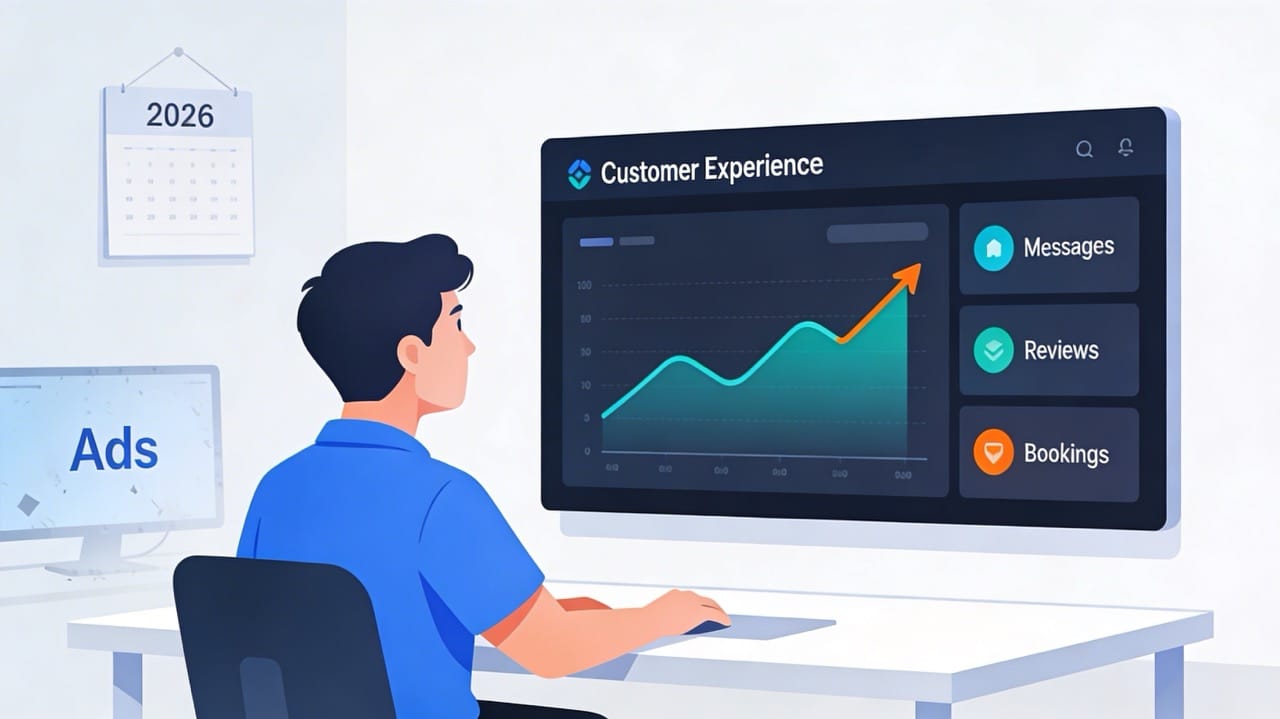
You can run the most clever ad campaigns, but if your customer experience is broken, you’re probably paying to send people into a leaky bucket.
This is a large and real problem businesses have; no system to take care of the people who’ve already raised their hand.
Customer Experience Management (CXM) is how that gap gets fixed.
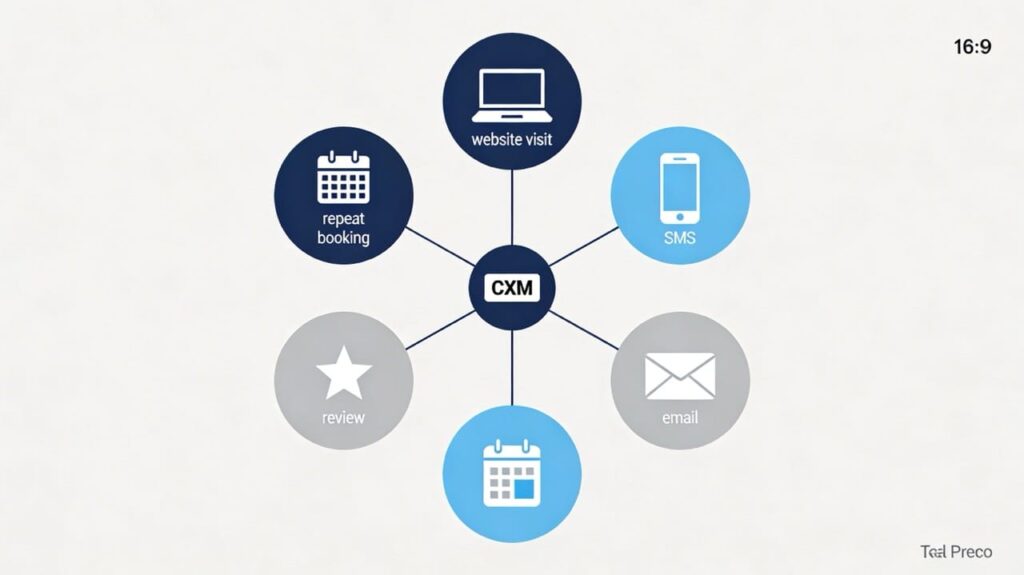
CXM is the practice of tracking, orchestrating, and improving every interaction a customer has with your business—from first click to repeat purchase and referrals—using a mix of strategy, people, and technology. CXM is not a buzzword; it’s a practical way to get more value out of the traffic and customers you already have.
At Devbo, this is the lens we use: rather than selling “just a website” or “just marketing,” the focus is on building systems that stay connected with customers, automate communication, and make the whole journey feel effortless.
Marketing vs. CXM (And Why Marketing Isn’t Always Enough)
Traditional marketing is mostly about getting attention—ads, campaigns, content, SEO, social. CXM is about what happens after you get that attention.
Big platforms like IBM, Microsoft, and Adobe all describe CXM the same way: a discipline for capturing and managing every touchpoint across the customer journey, then using that data to make each interaction more relevant, consistent, and profitable.
In other words:
- Marketing asks: “How do we get more people in the door?”
- CXM asks: “What happens to them after they walk in, and why would they stay?”
That second question is the one that actually grows lifetime value.
A few reasons CXM is overtaking pure marketing:
- Customer acquisition costs keep climbing. It’s 5–25 times more expensive to acquire a new customer than to keep an existing one, and a 5% bump in retention can nearly double profits in some models.
- Customers expect personalization and consistency. Around 70–74% of people say they are more comfortable with personalized messages—as long as they are genuinely helpful and consistent across channels.
- Digital experience is now the battleground. Small‑business trend reports for 2026 show a clear shift: those who invest in digital customer experience—speed, clarity, convenience—win against those who just “run more ads.”
Marketing still matters. But without CXM, marketing becomes an expensive revolving door.
What Customer Experience Management Actually Is (Plain English)
Stripping away the enterprise jargon, CXM simply means being intentional about every step a customer takes with your business and using systems to make that experience smoother, more personal, and more reliable over time.
Under the hood, that usually looks like:
- A central CRM hub where all your customer data and messages live (not scattered across inboxes and spreadsheets).
- Automation to handle the boring but critical stuff—follow‑ups, reminders, status updates, review requests.
- Journey mapping so you know what happens from “first contact” to “loyal customer,” and where people fall off.
- Feedback loops so you can see what’s working, what’s breaking, and where customers are getting stuck.
It’s not magic. It’s process + tools + empathy.
Why CXM Matters More Than “More Marketing”
Businesses feel this every day:
You can pour money into SEO, ads, and content, but if no one follows up, no one asks for reviews, and no one manages conversations, the ROI flattens out.
Experience‑management research points the same direction:
- CX is now called “the ultimate growth strategy” because products and promotions are easy to copy—experiences aren’t.
- The CXM market itself is exploding, projected to grow sharply through 2032 as more brands realize they can’t out‑advertise bad experiences anymore.
- Automation and AI are shifting from “marketing gimmicks” to the backbone of small‑business service capacity—doing more with lean teams without tanking quality.
So if the mindset is still “we just need more leads,” the game being played is outdated. The mindset should be:
“Can we respond fast, remember people, and make every interaction feel easy?”
That is CXM.
The Four CXM Pillars
There are a lot of ways to slice CXM, but for local businesses and service brands, four pillars tend to move the needle the fastest:
- Communication
- Follow‑ups
- Reviews & reputation
- Customer journeys (your actual systems)
Devbo uses these four pillars as the foundation for CXM engagements, regardless of the tools involved.
Pillar 1: Communication That Lives in One Place
Most small businesses are drowning in scattered conversations—emails, texts, DMs, contact‑form replies, missed calls. Nobody on the team can see the full picture, so customers repeat context and leads quietly die.
Modern CXM says: put it all in one timeline per person.
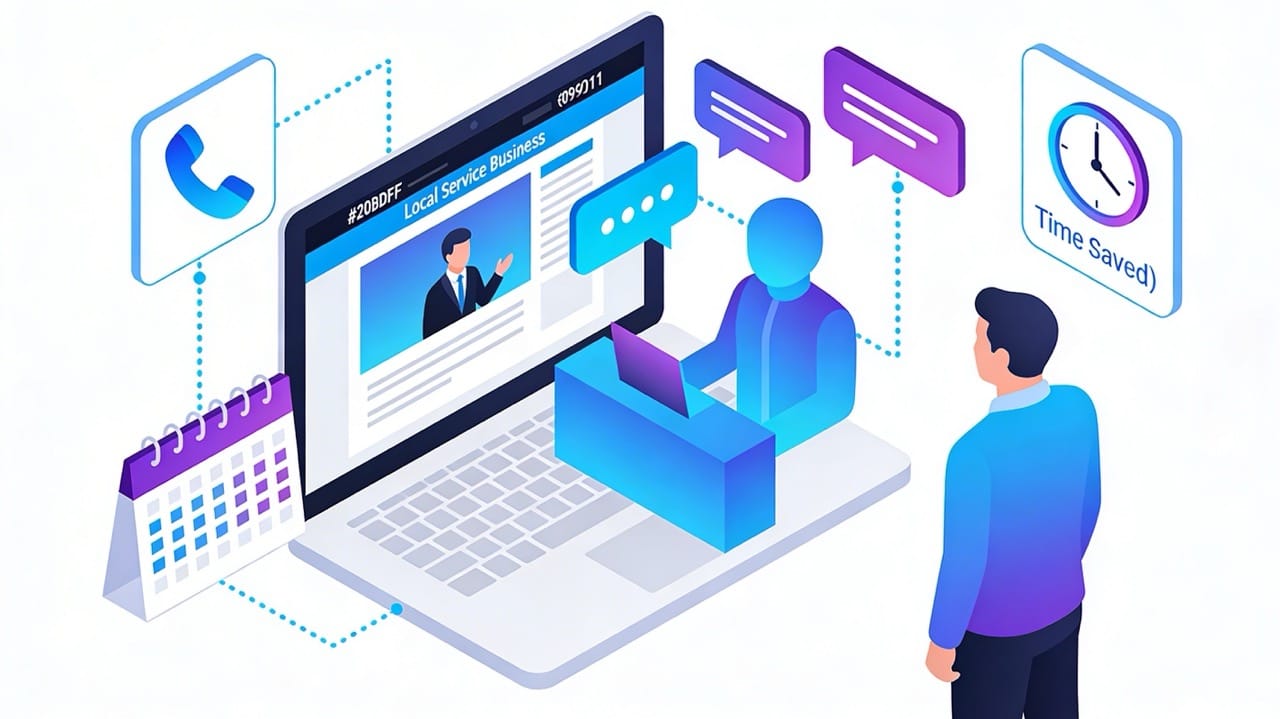
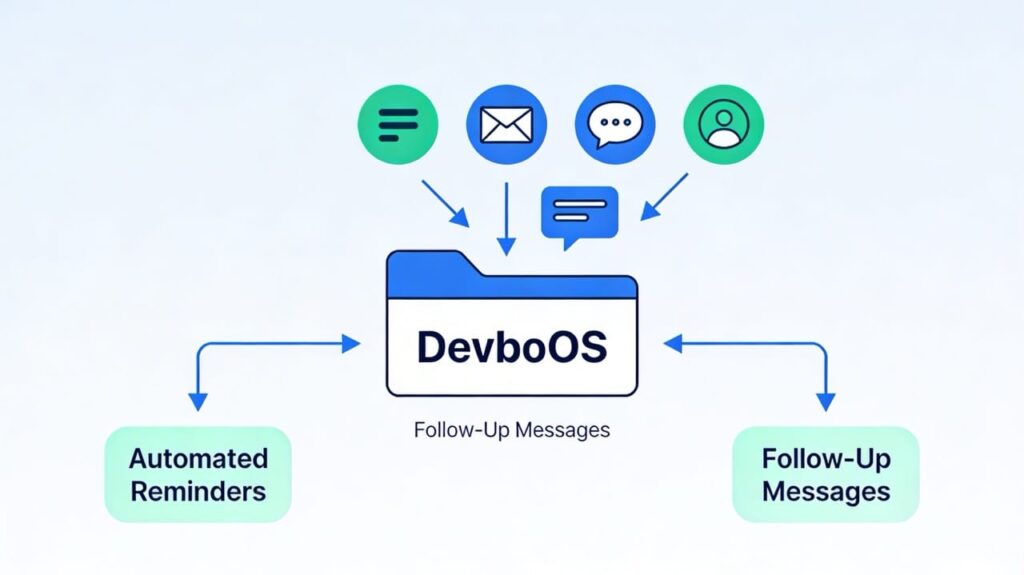
Unified “Conversations” dashboards bring SMS, email, calls, social DMs, and website chat into a single view tied to each contact record. When a reply goes out, it happens from that same place.
In practice, that looks like:
- A central inbox with SMS, email, chat, and social messages tied to each contact.
- The ability to see how someone first found the business, which forms they filled out, which emails they opened, and what they last asked—before responding.
- Templates and snippets to reply faster without sounding like a robot.
Why this matters now:
- Customers expect omnichannel: they might start on a website, ask a question on Instagram, and confirm via text. They do not care how the tech stack is wired—they just want not to be ignored.
- Reports show that 71% of consumers expect consistent experiences across channels, but only 29% say they actually get it. CXM closes that gap.
When communication is organized, marketing finally has somewhere intelligent to land.
Pillar 2: Follow‑Ups That Happen Automatically (And Stop When They Should)
Most of the “magic” of CXM is simply remembering to follow up, every time, without being annoying.
Automation platforms allow multi‑step, multi‑channel follow‑up sequences—email, SMS, voicemail drops, reminders—that fire based on real events: form fills, bookings, no‑shows, purchases, or status changes in a pipeline.
For example:
- A new lead fills out a form and, within minutes, receives a welcome text and email confirming the request.
- If they don’t book, a short nurture sequence kicks in—maybe a FAQ email, a short video, and a “still interested?” message spread over a few days.
- Once they reply or book, the automation stops or switches paths, instead of spamming them.
This is where CXM and marketing blend:
- It’s still “marketing,” but it feels like helpful, timely follow‑up instead of cold campaigns.
- The speed‑to‑lead advantage (contact within minutes) is built in, rather than hoping someone remembers to check the inbox.
This pairs well with psychology‑driven conversion work. A well‑designed page gets someone to raise their hand; a well‑designed follow‑up system makes sure that moment of interest isn’t wasted—something covered in more depth in articles like Psychology-First CRO for eCommerce and Optimize Your Website for Conversions.
Pillar 3: Reviews and Reputation on Autopilot
CXM isn’t just about what happens inside internal tools—it’s about how the business looks in the wild.
Online reviews are one of the highest‑leverage parts of the journey: most people trust them as much as personal recommendations, and a steady stream of fresh 4–5 star reviews is rocket fuel for local SEO.
The friction point is time. Very few teams can manually email or text every happy customer.
Reputation‑management workflows solve that:
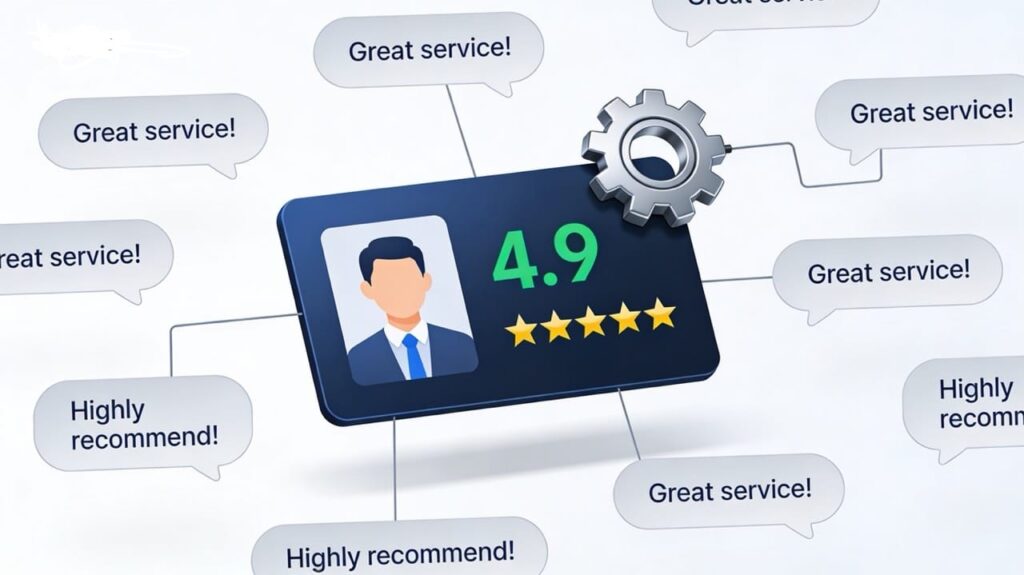
- After an appointment, completed invoice, or tagged status, the system automatically sends a review request via SMS or email with a direct link to the preferred platform.
- If the customer clicks a “happy” option, they are nudged to leave a public review. If they are unhappy, they are routed to a private feedback form instead of posting a negative review.
- A dashboard shows how many reviews came in, where they landed, and what the average rating looks like over time.
For businesses that are already investing in local SEO, Google Business Profile optimization, and citation building (like in the Google Business Profile Optimization Guide and Top 50 Local SEO Citations), automated review collection multiplies the impact.
Pillar 4: Customer Journeys and Systems (The Real “OS” Part)
The last piece is where many businesses have… nothing documented.
No map of the journey. No defined stages. Just “we get leads, then we kind of wing it.”
CXM best practices flip that perspective. They encourage teams to actually map:
- How people first discover the business (search, ads, referrals, events).
- How they inquire or book (website forms, chat, phone, DMs).
- What happens from “interested” to “paid” (consults, proposals, onboarding).
- What happens after the job (check‑ins, education, renewals, referrals).
Modern CXM tools turn that journey map into something interactive:
- Pipelines that visually show where every lead or client is—new, contacted, consult booked, proposal sent, active, follow‑up, etc.
- Automated transitions that move people between stages when forms are submitted, invoices paid, or appointments completed.
- Conditional logic so new leads, returning clients, hot prospects, and unhappy customers each get a tailored experience.
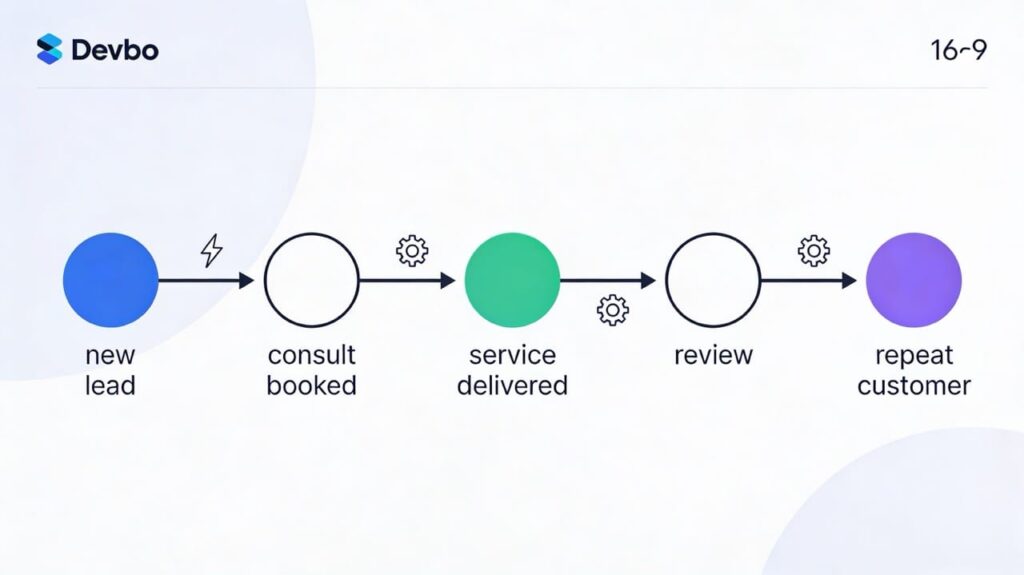
It’s a shift from “random acts of marketing” to a consistent customer operating system.
For verticals like dentistry, healthcare, legal, and financial services, pairing this with specialized web design (see posts like the Dentist Web Design Guide, Healthcare Web Design Guide, or Web Design for Financial Services in Florida) ensures both the site and back‑end systems support the same clear path.
Real‑World: How This Plays Out for a Local Business
To make it concrete, consider a dentist—since that’s a common example in local marketing.
Before CXM
- Website built (maybe on an AI builder) with a generic contact form.
- New patient calls → sometimes gets voicemail, sometimes a rushed receptionist.
- No‑shows are common, because nobody sends reminders.
- Happy patients rarely leave reviews, because nobody asks.
- When someone does leave a review—good or bad—there’s no process to respond.
After CXM is in place
- Website form and chat feed into a unified inbox—no leads lost in email purgatory.
- New inquiries trigger an instant text confirmation and a link to book or confirm their consult.
- The system sends automated reminders and lets patients reschedule via text.
- After the visit, review requests go out automatically. Negative feedback is caught privately, positive reviews go straight to Google.
- Lapsed patients get a gentle “it’s time for your cleaning” reminder instead of falling through the cracks.
Same ad budget. Same website. Completely different business outcome.
The same pattern applies to law firms, med spas, coaches, and financial services—the vertical matters less than the commitment to mapping and automating the experience.
But Where Does Marketing Fit Now?
CXM doesn’t replace marketing; it changes the order of operations.
- Years ago, it was possible to get away with “run traffic, answer the phone when we can, hope for the best.”
- With more channels, more competition, and more demanding customers, that approach burns budget and goodwill at the same time.
A more modern sequence:
- Get the experience system in place (CXM): central inbox, core automations, review engine, clear journey.
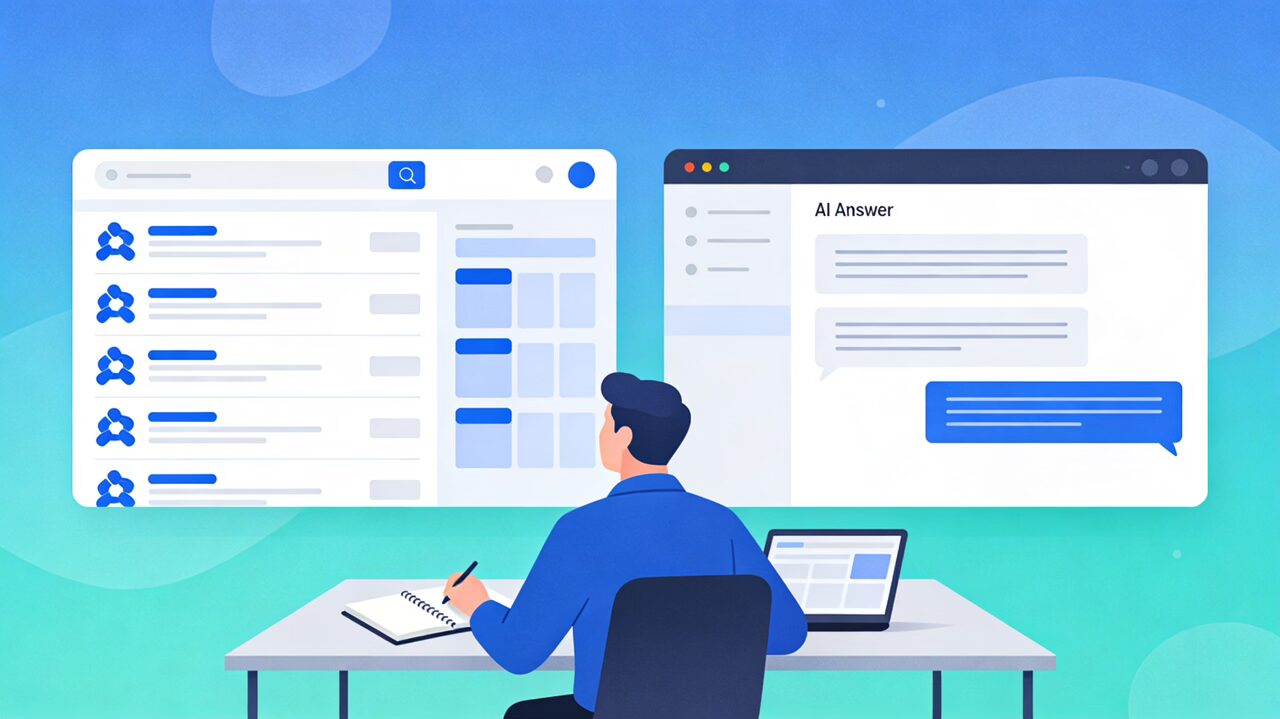
- Then amplify it with marketing: SEO, AEO, content, ads, email, brand building.
When those two pieces support each other, businesses see:
- Better ROI on campaigns because more leads turn into real customers.
- Better data, because it becomes clear which sources create high‑LTV clients.
- Better feedback, because CXM surfaces where people are confused, dropping off, or delighted.
For readers who want to deepen the acquisition side, this topic pairs well with articles like:
- SEO and AEO guides – for getting found by the right people in the first place.
- Creating Blogs That Rank in Google’s Top 10 – for content that feeds into the CXM system instead of sitting in a vacuum.
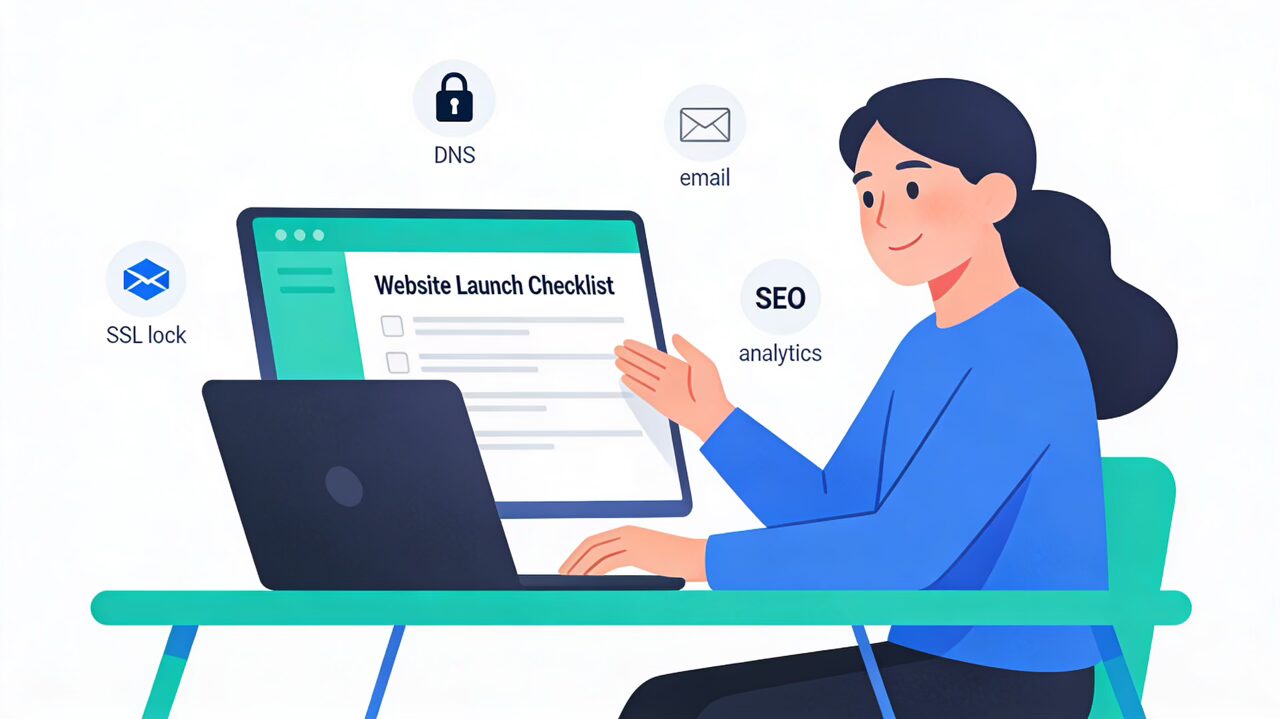
- Basic Website Launch Checklist and Prepare Your Business for a New Website – for getting the foundation right before wiring up automations.
- Websites in Minutes? Here’s What Those AI Builders Don’t Tell You and DIY Web Design: Don’t Be Fooled by the Illusion of Easy – for readers tempted by “instant” websites that ignore the experience layer.
How Devbo Helps Businesses Build CXM (And a Brief Note on DevboOS)
Different companies use different tool stacks. From the client’s point of view, what matters most is that the experience works—not which logo is on the software.
Devbo’s work around CXM typically includes:
- Auditing how leads and customers currently move through the business.
- Designing the communication, follow‑up, review, and journey systems around the four pillars.
- Implementing and testing those systems so they feel natural for both the team and the customer.
For businesses that want software to manage this long‑term, Devbo offers DevboOS, a customer experience platform that brings together CRM, messaging, automation, reviews, and pipelines into one place. The goal isn’t to add more tools, but to make sure the tools quietly support the kind of experience customers now expect.